Rethinking Enterprise Connectivity: Engineering Secure, Scalable, Zero-Config Networking for Distributed Data Platforms
Modern distributed systems — especially global data platforms — pose a class of connectivity challenges that traditional networking architectures simply weren’t designed to handle. This blog deconstructs those challenges and presents a rigorous engineering view of Cloudbridge — a novel pattern for enterprise data plane connectivity designed to eliminate months of network configuration work and deliver automated, zero-touch, secure connectivity at global scale.
The Problem Space: Enterprise Connectivity at Planetary Scale
Distributed data architectures are now the rule rather than the exception. Enterprises operate across multi-cloud, hybrid on-premises, edge, and isolated security domains, often with diverse network topologies, tooling, and security policies. Data does not live in one place — and yet platforms must reliably reach it.
Key Challenges from Traditional Approaches
1. High Operational Complexity
Legacy methods like IP VPNs, firewall configuration and hardening, and manual TLS certificate issuance require weeks of coordination between:
- Network engineers
- SecOps teams
- Application developers
- Deployment staff
Each environment has unique security constraints, making repeatability and predictability extremely difficult — especially as connection counts scale from tens to thousands.
2. VPN Dependency and Scalability Limits
Traditional VPN infrastructure uses hardware or virtual concentrators:
- Each has connection limits
- Bandwidth bottlenecks
- Single points of failure
Configuration varies across OS types, container environments, and cloud instances, and troubleshooting demands specialized networking expertise that development teams often lack.
3. Firewall Management Becomes a Bottleneck
Connecting distributed services traditionally implies:
- Hundreds of firewall rules
- Per-environment rule sets
- Manual rule syntax across vendor-specific interfaces
This causes security reviews, change tickets, and human coordination for every deployment change — drastically slowing CI/CD velocity.
4. Certificate Lifecycle Hazards
Conventional PKI assumes manual oversight:
- Days or weeks to issue certificates
- Spreadsheet or basic tooling to track the certificate expiry
- Outages from expired certificates
- CRL propagation delays
- OCSP dependencies and infrastructure management
The result? Unreliable automation and brittle operations in distributed systems.
Cloudbridge: A Paradigm Shift in Secure Distributed Connectivity
Cloudbridge was designed explicitly to remove the entire network-configuration burden from distributed data observability — and, by extension, any large-scale distributed system that must reach into security-constrained environments.
Reverse Connectivity: Inbound Becomes Outbound
Instead of relying on inbound firewall port openings or exposed endpoints, Cloudbridge reverses the model:
- Each data plane instance initiates an encrypted long running outbound connection to a central control plane
- These outbound connections traverse existing egress policies (typically mTLS)
- No incoming network rules are required
This fundamentally alters the security posture: clients reach the platform, not the other way around.
Diagram: Reverse Connectivity Flow
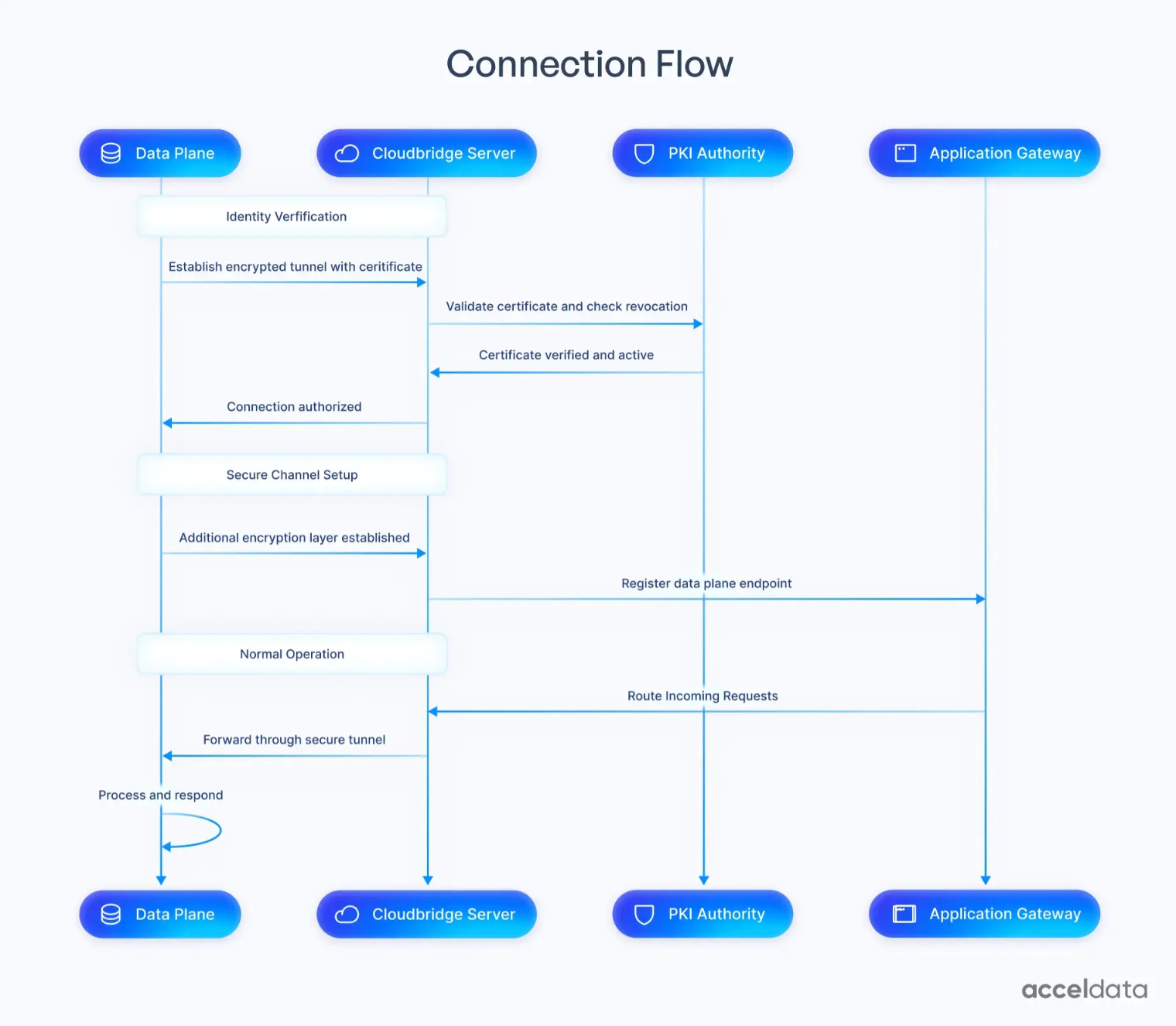
Outbound-only networking ensures Cloudbridge works even in the strictest enterprise environments — including highly segmented data centers.
Security by Design: Zero Trust and Continuous Validation
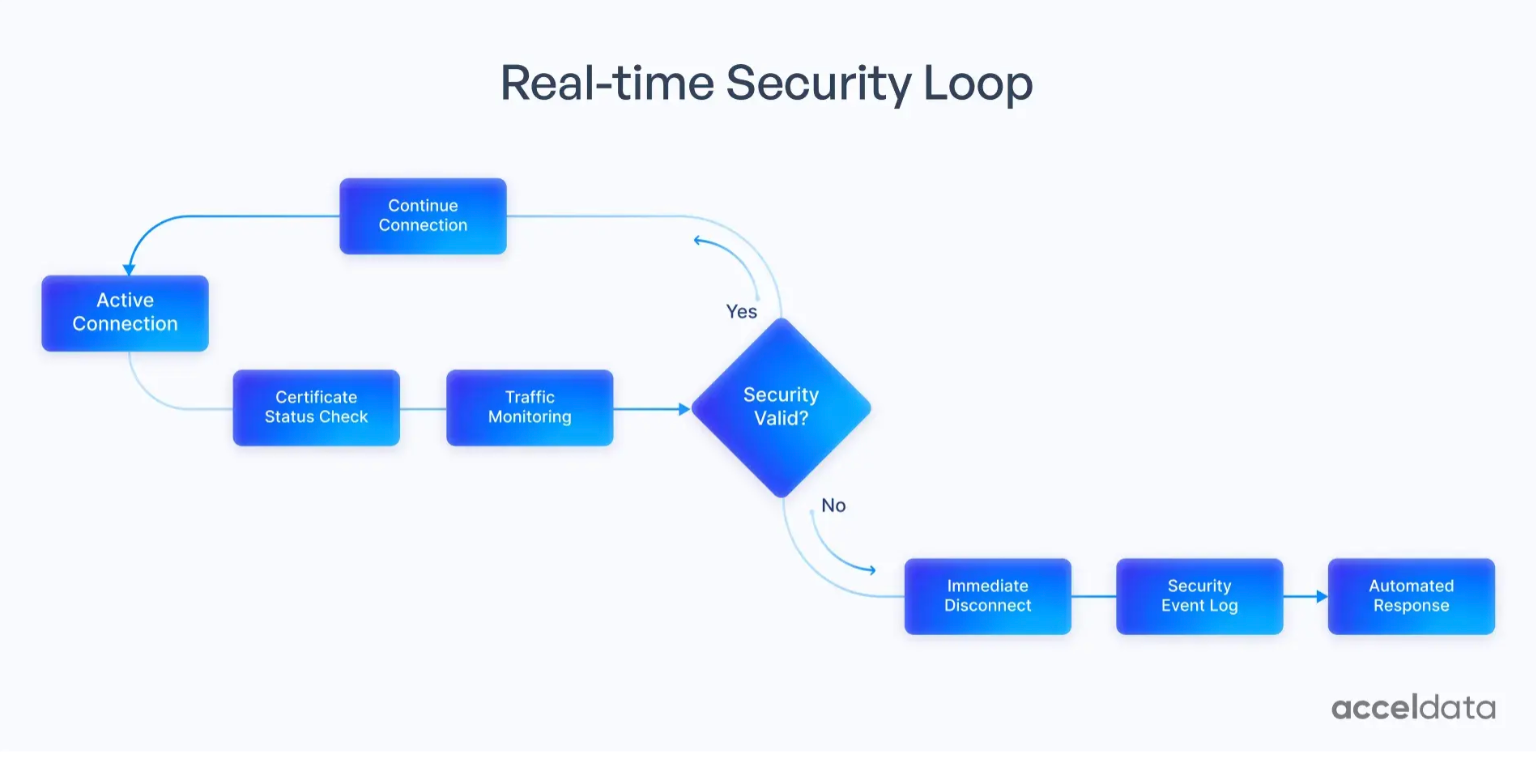
Cloudbridge implements multiple layered security principles. Cloudbridge continuously validates security posture, checking certificate status and enforcing current security policies.
Mutual TLS with Automated PKI
- Every client and server uses mTLS with certificates
- Mutual authentication ensures both parties verify identity before establishing the connection
- PKI is automated, removing manual issuance and expiration headaches
This means:
- No shared passwords
- No human-managed certificates
- No manual revocation lists
Instead, certificates are dynamically generated, validated, and rotated without operator intervention.
Continuous Authorization and Monitoring
Traditional systems authenticate once on connection. Cloudbridge takes it further:
- Every request is continuously verified
- Certificate status is checked in real time
- Behavioral patterns are monitored to detect anomalies
This aligns with modern zero-trust security models, where trust is never assumed, only validated.
Diagram: Zero Trust Security Stack
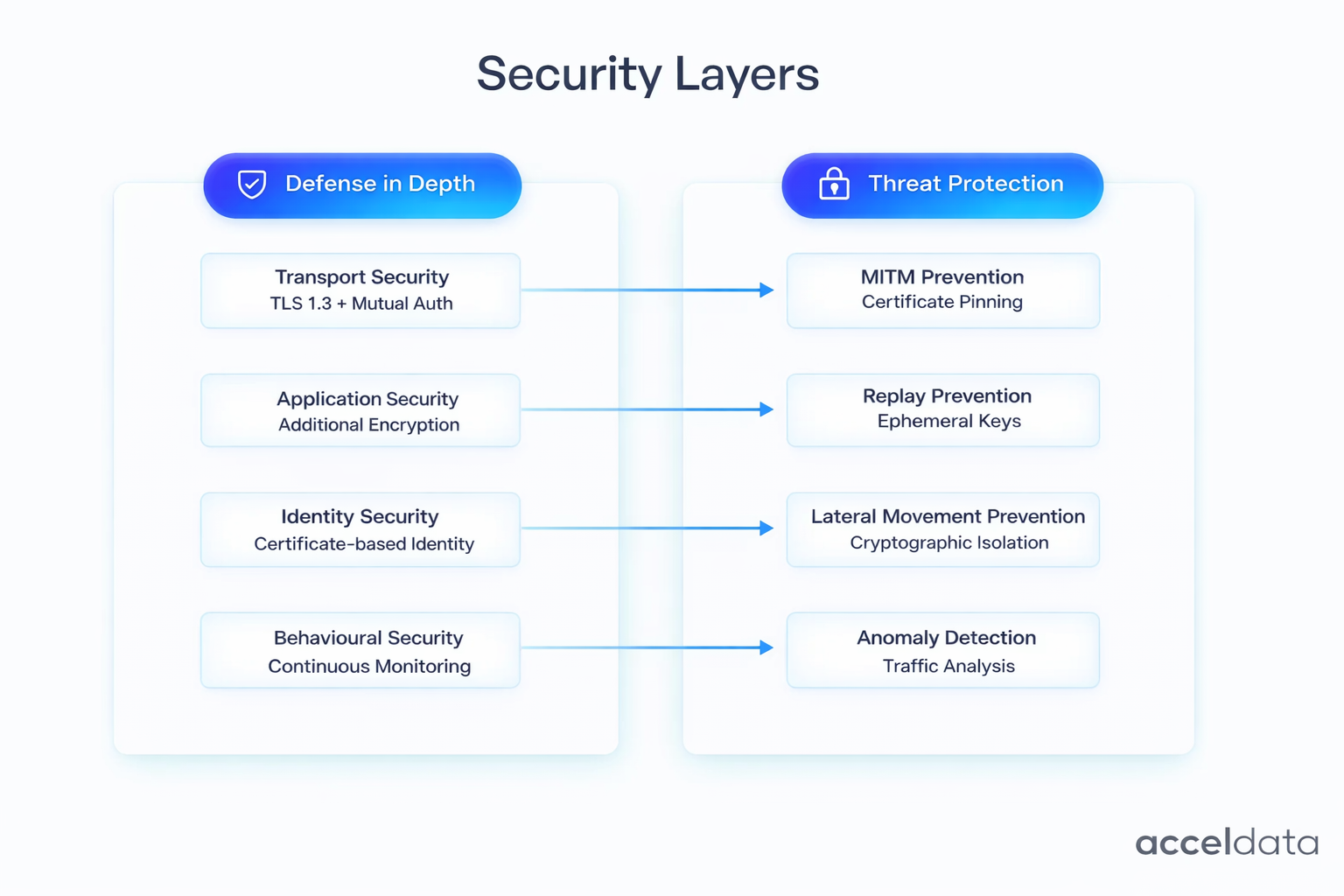
Each layer strengthens the security posture from simple transport encryption to active behavioral verification.
Automated Operations: Certificates, Recovery, and Load Balancing
Cloudbridge automates connectivity operations to a degree rarely seen in enterprise networking:
Certificate Lifecycle Automation
- Certificates are auto-generated and renewed
- Expiration is invisible to operators
- Certificates are revoked quickly and globally when needed
This eliminates outages due to mismanaged certificate lifecycles.
Connection Recovery and Resilience
Cloudbridge distinguishes between:
- Transient network failures
- Persistent underlying failures
It uses adaptive backoff algorithms that:
- Prevent aggressive retries
- Optimize for healthy reconnection
- Sustain long-running, high-availability tunnels
This demonstrates that operational stability is an intrinsic part of the design, not an afterthought.
Dynamic Service Discovery
Rather than manual gateway configuration:
- Services register themselves upon connection
- Routing metadata is implicit in identity certificates
- Load distribution is optimized dynamically
This allows global consistency with per-region performance locality and routing intelligence.
Engineering Impact: What Cloudbridge Unlocks
Cloudbridge fundamentally alters how engineers can build and operate distributed systems:
1. Drastically Reduced Deployment Time
Instead of weeks of coordination between networking, security, and operations:
- Connectivity can be established in hours
- No need to open inbound ports, or configure rules, or manage network change windows
2. Reduced Cognitive Load on Engineering Teams
Developers no longer depend on:
- Network specialists
- Manual firewall edits
- VPN troubleshooting
This liberates teams to focus on platform logic, not connectivity plumbing.
3. Consistent Security and Identity
Every connection uniformly follows:
- Zero-trust
- Continuous validation
- Automated credentials
Which boosts confidence in both operational guarantees and compliance posture.
Core Architectural Summary
To replicate this pattern in your own environment, the key architectural principles are:
- Reverse Connectivity (Outbound-initiated Channels)Avoid opening inbound ports; use persistent outbound connections.
- Automated Certificate IdentityCertificates should be machine-generated, tenant-isolated, and auto-renewed.
- Zero-Trust Continuous AuthorizationAuthenticate and validate every message, not just the initial handshake.
- Behavioral Security LayerIntegrate anomaly detection into connectivity flows.
- Automated OperationsEliminate manual recovery, renewal, and routing configuration through algorithms.
Toward Next-Gen Enterprise Connectivity
Cloudbridge represents a shift from network-centric thinking to identity-centric secure connectivity. By removing traditional configuration burdens and embedding security and resilience at every layer, it provides a practical and scalable pattern for global data systems facing hybrid, cloud, and edge diversity.
For engineers building distributed platforms in the modern era, these design principles: automated identity, reverse connectivity, zero trust, and continuous validation, are essential tools for creating reliable, secure, and scalable infrastructure.
You can listen to a detailed conversation here from the Distributed data architecture experts of Acceldata:
A Talk on Zero-Config & Zero-Trust Networking for Distributed Data